Chimps Can Weigh Evidence and Update Their Beliefs Like Humans Do
本文是案例分析型(实验研究型)文章,整体按照「引出研究—介绍实验—分析结果—延伸讨论—总结意义」的思路展开。阅读时可以重点关注实验目的、实验流程和实验结果,以及研究者如何说明实验能证明什么、又不能证明什么。全文652词,31句,整体难度适中,跟着实验主线慢慢读就好。👀
- generally /ˈdʒenərəli/ adv. 通常,一般来说
- reason /ˈriːzn/ n. 理由,原因
- belief /bɪˈliːf/ n. 信念,看法
- reflect /rɪˈflekt/ v. 熟词僻义 反思,仔细思考(≠ 反射)
- reflect on sth 仔细思考某事,反思某事
- serial /ˈsɪəriəl/ adj. 连续的,系列的
- serial killer 连环杀手
- attic /ˈætɪk/ n. 阁楼
- creak /kriːk/ v. 发出嘎吱声
2)译文:你可以对这些理由进行反思
2)译文:“我为什么觉得阁楼上有个连环杀手?因为地板吱嘎响了一声。”
- paragon /ˈpærəɡən/ n. 典范,模范
- rationality /ˌræʃəˈnæləti/ n. 理性
- paragon of rationality 理性的典范
- adjust /əˈdʒʌst/ v. 调整
- additional /əˈdɪʃənl/ adj. 额外的,附加的
- evidence /ˈevɪdəns/ n. 证据
- demand /dɪˈmɑːnd/ v. 要求,需要
- scour /ˈskaʊə(r)/ v. 彻底搜查,仔细搜寻
- baseball bat 棒球棒
- in hand 在手中,拿着
- conclude /kənˈkluːd/ v. 得出结论
- creaky /ˈkriːki/ adj. 嘎吱作响的
2)译文:作为理性的典范
2)译文:你也能调整自己的信念
2)additional evidence 新的证据;demands 要求,这里是拟人化用法,把证据当作能发号施令的主体;it 指代前文的 adjust your beliefs 这个动作
3)译文:当新的证据要求你这样做时
2)译文:把阁楼搜了个遍之后
2)画面感很强:一个人握着“武器”搜完阁楼,结果什么都没有。幽默地说明证据推翻了原先的信念
3)译文:手持棒球棍
2)just 强调“不过是……罢了”,语气轻松,与之前紧张的“连环杀手”形成反差
3)译文:我不得不承认,这不过是一栋老旧的、会吱嘎作响的房子罢了
1 You generally have reasons, good or bad, for your beliefs.
2 You can reflect on those reasons: “Why do I think there’s a serial killer in the attic? It’s because the floor creaked.”
3 And, paragon of rationality that you are, you can also adjust your beliefs when additional evidence demands it: “Having scoured the attic, baseball bat in hand, I must conclude that it’s just an old, creaky house.”
以生活化的假想场景作引子,引出“信念修正”这一话题:
① 提出一般情况:人的信念通常都有理由
②-③ 具体举例:人能够反思这些理由,并根据新证据调整信念
- cognitive /ˈkɒɡnətɪv/ adj. 认知的
- be known as 被称为
- revision /rɪˈvɪʒn/ n. 修改,修正
- belief revision 信念修正(指根据新证据调整已有信念的认知过程)
在认知科学、哲学逻辑和人工智能中,belief revision 通常指一个人或系统在获得新信息后,对原有信念进行调整的过程。新信息如果和旧看法冲突,就需要判断哪些旧想法还站得住,哪些需要修改或放弃。
按字面看也很直观:belief 是你当前相信的看法,revision 是后来把它修一修。合在一起,就是原本这样判断,后来知道了新的情况,于是重新调整。比如,你本来以为朋友迟到是因为不重视这次见面;后来发现地铁临时停运,你对这件事的判断就会变。
- hallmark /ˈhɔːlmɑːk/ n. 典型特征,鲜明标志
- human rationality 人类理性
- distinguish /dɪˈstɪŋɡwɪʃ/ v. 区分,使有别于
- distinguish A from B 将A与B区分开来
2)has long been considered 现在完成时被动,表示“长期以来一直被认为”
3)译文:长期以来,它一直被视为人类理性的典型体现
2)distinguish A from B 将 A 与 B 区分开
3)译文:是人类区别于其他动物的重要特征
- rely on 依赖,依靠
- reflective /rɪˈflektɪv/ adj. 反思性的,内省的
- awareness /əˈweənəs/ n. 意识,认知
- thought process 思维过程
- metacognition /ˌmetəkɒɡˈnɪʃn/ n. 元认知(对自身认知过程的认知和监控)
- meta- /ˈmetə/ prefix 元-(表示“关于自身的”)
- cognition /kɒɡˈnɪʃn/ n. 认知
- species /ˈspiːʃiːz/ n. 物种
- obviously /ˈɒbviəsli/ adv. 明显地
- possess /pəˈzes/ v. 拥有,具备
2)主干是简单的主谓宾结构,宾语是 A of B 的结构:of our own thought processes (对我们自身思维过程)作定语修饰 reflective awareness(反思性觉察)
3)译文:它依赖于我们对自身思维过程的反思性觉察
2)thinking about thinking 用重复手法直白点明含义:对“思考”本身的思考
3)or metacognition 给出学术术语:元认知
4)译文:也就是对思考本身的思考,即元认知
2)obviously 在否定结构中限定 possess,表达的是“看不出明显具备”,语气比“显然不具备”更谨慎
3)译文:而其他物种似乎并不具备这种能力
metacognition 常被译为“元认知”,大致是对自己思维过程的觉察和监控。比如,“我为什么会这么想?”“我对这个判断有多确定?”“新证据出现后,我要不要改判断?”这些都属于元认知相关的问题。
元认知在人类身上比较容易看出来:人能说出自己为什么相信某件事,也能说出后来为什么改了判断。放到动物身上就难很多。动物会学习、会选择、会避开危险,但这些行为还不能直接说明它们会回头检查自己的判断。
研究动物元认知时,研究者通常会看它们遇到新证据后会不会调整选择。如果会,再讨论它们是否在比较证据、检查判断,依据就会多一些。
- recent /ˈriːsnt/ adj. 最近的
- Science /ˈsaɪəns/ n. 《科学》(国际顶级学术期刊)
- evolutionary /ˌiːvəˈluːʃənəri/ adj. 进化的
- relative /ˈrelətɪv/ n. 熟词僻义 亲属(此处指近亲物种)
- closest evolutionary relatives 最近的进化近亲
- reason /ˈriːzn/ v. 熟词僻义 推理,推断(≠ n. 原因)
- surprisingly /səˈpraɪzɪŋli/ adv. 令人惊讶地
- sophisticated /səˈfɪstɪkeɪtɪd/ adj. 复杂精密的,高级的
2)主谓宾结构;in Science 指发表在《科学》杂志上;that 引导宾语从句
3)译文:最近发表在《科学》杂志上的一项研究表明……
2)reasons 此处 reason 作动词,意思是“进行推理”
3)in surprisingly sophisticated ways 以令人惊讶的复杂方式
4)译文:我们在进化上最亲近的物种之一也能以令人惊讶的复杂方式进行推理
Science、Nature、Cell、PNAS 这几个名字在外刊里很常见,可以先记个眼熟。
其中 Science 和 Nature 是综合性很强的科学期刊;PNAS 是美国国家科学院的会刊,也属于跨学科期刊;Cell 更偏生命科学,但外刊报道科研时也经常见到。
看到这些名称时,大致知道文章引用的是正式发表的研究,通常经过同行评议。

1 This cognitive skill is known as belief revision.
2 It’s long been considered a hallmark of human rationality that distinguishes us from other animals.
3 It relies on a reflective awareness of our own thought processes—thinking about thinking, or metacognition—that other species don’t obviously possess.
4 But a recent study in Science shows that one of our closest evolutionary relatives also reasons in surprisingly sophisticated ways.
由概念界定转入研究发现,形成“传统认知 vs. 新发现”的对比:
① 定义概念:将上段展示的认知能力命名为“信念修正”
②-③ 建立传统认知:信念修正是人类理性的标志,依赖元认知,其他物种不具备
④ 转折引出新发现:最近《科学》杂志的研究表明,我们的进化近亲也能进行复杂推理
- a series of 一系列的
- experiment /ɪkˈsperɪmənt/ n. 实验
- researcher /rɪˈsɜːtʃə(r)/ n. 研究人员
- chimpanzee /ˌtʃɪmpænˈziː/ n. 黑猩猩
- sanctuary /ˈsæŋktʃuəri/ n. (野生动物)保护区,庇护所
- Uganda /juːˈɡændə/ n. 乌干达(东非国家)
- juggle /ˈdʒʌɡl/ v. 熟词僻义 同时应付,兼顾(多个事物)(≠ 杂耍)
- source /sɔːs/ n. 来源,出处
- evidence /ˈevɪdəns/ n. 证据,依据
2)译文:在一系列实验中
2)at the Ngamba Island Chimpanzee Sanctuary in Uganda 是地点状语,阅读时可以快读跳过,无需纠结
3)译文:研究人员对乌干达恩甘巴岛黑猩猩保护区的黑猩猩进行了测试
2)how 引导的宾语从句做 see 的宾语,how在这里表示“如何”
3)juggle 本义“(杂耍般)同时抛接”,这里引申为“权衡、同时应对”多种证据来源
4)译文:以观察这些动物如何权衡不同来源的证据
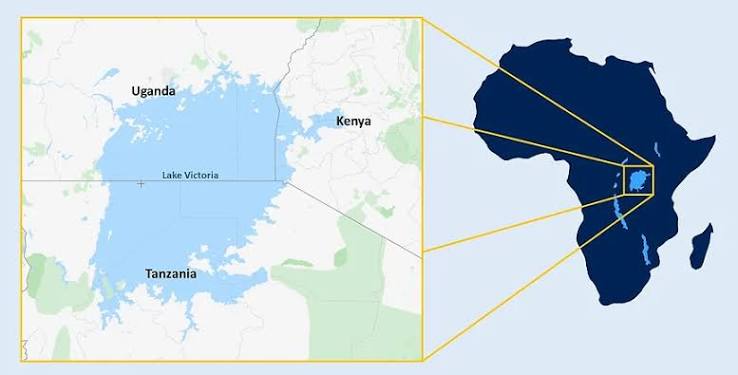
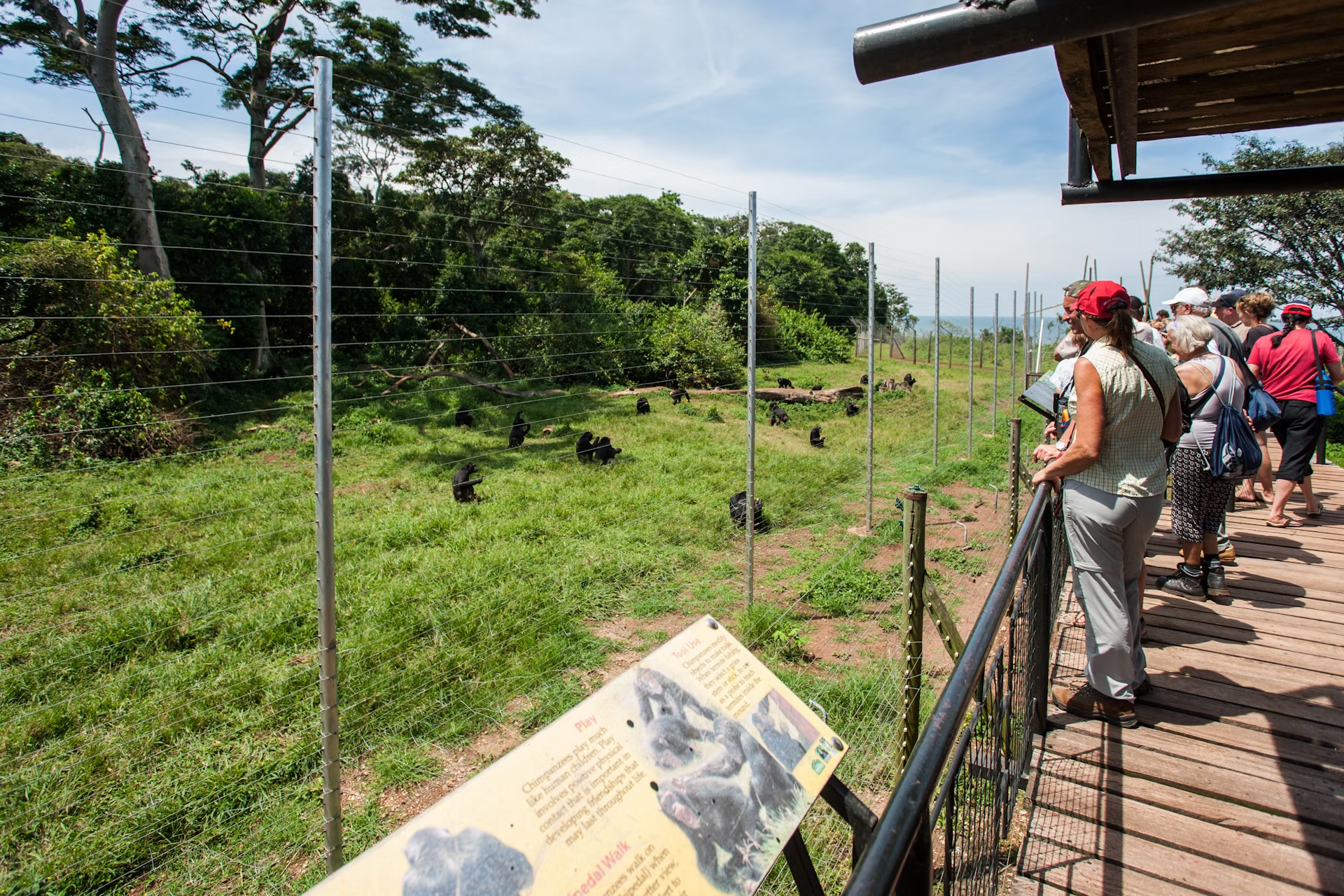
Ngamba Island Chimpanzee Sanctuary(恩甘巴岛黑猩猩保护区)位于乌干达境内的维多利亚湖一带。Uganda 是东非国家,东非也是野生黑猩猩分布的重要区域之一。
乌干达所在地区的黑猩猩通常归入东非黑猩猩(eastern chimpanzee)这一类。保护区里的黑猩猩多与救助、照护和保护教育有关,也方便研究人员在相对稳定的环境里观察它们的行为。
- revolve /rɪˈvɒlv/ v. 围绕,以……为中心
- revolve around 围绕……;以……为核心
- hide /haɪd/ v. 藏,隐藏(hide - hid - hidden)
- chimp /tʃɪmp/ n. 黑猩猩(chimpanzee 的非正式缩写)
- promising /ˈprɒmɪsɪŋ/ adj. 有希望的,看起来会成功的
- based on 基于,根据
- initial /ɪˈnɪʃl/ adj. 最初的,开始的
- clue /kluː/ n. 线索,提示
2)hidden in one of several boxes 是过去分词短语做后置定语,修饰 food
3)译文:每项实验都围绕食物展开,食物被藏在几个盒子中的一个里
2)译文:黑猩猩会选择那个盒子
2)they thought 可理解为插在中间的“它们认为”;阅读时可先将它括起来:the box (they thought) was most promising
3)most promising 在这篇文章语境中指“最有可能藏有食物的”
4)译文:它们认为最有可能藏有食物的(那个盒子)
2)译文:根据第一条线索
- conflict /kənˈflɪkt/ v. 冲突,相矛盾
- conflict with 与……相矛盾
2)another clue 指紧接着第一条线索出现的第二条线索
3)译文:随后它们会得到第二条线索
2)conflict with 意为“与……相矛盾”;the first 省略了 clue,即 the first clue
3)译文:而这条线索有时与第一条相矛盾
- given /ˈɡɪvn/ v. give 的过去分词(give - gave - given)
- chance /tʃɑːns/ n. 机会;可能性
- update /ˌʌpˈdeɪt/ v. 更新,修正
- predict /prɪˈdɪkt/ v. 预测
- rational /ˈræʃnəl/ adj. 理性的,合理的
- rational-choice model 理性选择模型(假设决策者总是做出最优选择的理论模型)
- change one’s mind 改变主意
2)to update their decision 不定式做后置定语修饰 chance
3)译文:在有机会更新决策时
2)predicted by a rational-choice model 过去分词短语做后置定语,修饰 the box,说明“这个盒子是理性选择模型所预测的那个”
3)译文:它们几乎总是选择理性选择模型所预测的那个盒子
2)only when 引导时间状语从句,限定“只有在……时才改变”
3)what they already knew:what 引导名词性从句做 than 的比较对象,意为“它们已经知道的信息”
4)译文:只有当新信息比已知信息更有力时,它们才会改变主意
rational-choice model 常用于经济学和社会科学里研究决策行为。它的基本想法是:人在做选择时,会衡量不同选项的收益、代价和已知信息,选择对自己更有利的方案。
这篇文章里,黑猩猩的行为符合这个模型的预测。它们先根据第一条线索做选择;后来如果新线索更可靠,比如发现原本以为有苹果的盒子里其实是石头,才会改选。也就是说,它们看起来会按线索强弱更新判断,表现出接近理性选择的能力。
- knock it out of the park 表现极为出色(棒球比喻:把球打出球场 = 大获成功)
- evolutionary /ˌiːvəˈluːʃənəri/ adj. 进化的,演化的
- anthropologist /ˌænθrəˈpɒlədʒɪst/ n. 人类学家
- evolutionary anthropologist 进化人类学家
- Duke University 杜克大学(美国顶尖研究型大学,位于北卡罗来纳州)
- be involved in 参与……
2)译文:“这些黑猩猩的表现堪称完美”
2)an evolutionary anthropologist at Duke University 是 Brian Hare 的同位语,补充身份
3)译文:杜克大学进化人类学家布莱恩·黑尔说道
2)译文:他并未参与这项研究
Duke University 位于美国北卡罗来纳州达勒姆,是一所私立研究型大学。它的医学、商学、公共政策等方向比较有名。

外刊报道科研发现时,常会标明某位评论者 was not involved in the study。这里的意思是:Hare 没有参与这项研究,他的评价来自研究团队之外。这样的评论能给报道补上一层外部视角,避免整篇文章只听到研究团队自己的声音。
1 In a series of experiments, researchers tested chimpanzees at the Ngamba Island Chimpanzee Sanctuary in Uganda to see how the animals juggled different sources of evidence.
2 Each experiment revolved around food hidden in one of several boxes: The chimps would pick the box they thought was most promising based on an initial clue.
3 Then they’d get another clue that sometimes conflicted with the first.
4 Given the chance to update their decision, they almost always chose the box predicted by a rational-choice model and changed their mind only when the new information was stronger than what they already knew.
5 “The chimps knocked it out of the park,” says Brian Hare, an evolutionary anthropologist at Duke University, who was not involved in the study.
整体介绍实验目的,实验流程和实验结果:
① 交代实验目的:测试黑猩猩如何处理不同来源的证据
②-③ 介绍实验流程:先根据第一条线索选择盒子,再接收可能与之冲突的第二条线索
④-⑤ 说明实验结果+专家评价:黑猩猩的选择符合理性模型,只有新信息更有力时才改变主意;外部专家赞其“表现堪称完美”
- impressive /ɪmˈpresɪv/ adj. 令人印象深刻的,了不起的
- account for 考虑到,把……考虑在内(美式用法;本句中相当于 take... into account)
- clue /kluː/ n. 线索,迹象
- undermine /ˌʌndəˈmaɪn/ v. 削弱,损害
- evidence /ˈevɪdəns/ n. 证据
2)译文:最令人印象深刻的是
2)account for 在此表示“考虑到,把……考虑在内”,相当于 take... into account;不是更常见的“解释”或“占比”
3)译文:这些动物甚至会把这些线索考虑进去
2)undermine 削弱、推翻;earlier evidence 先前的证据。推翻先前证据指“与已知信息相矛盾的新线索”
3)译文:那些推翻先前证据的(线索)
- bounce /baʊns/ v. 弹跳,反弹
- given /ˈɡɪvən/ prep. 考虑到,鉴于
- previous /ˈpriːviəs/ adj. 先前的,之前的
- assume /əˈsjuːm/ v. 假定,认为
- at first 起初
- experimenter /ɪkˈsperɪmentə(r)/ n. 实验人员,实验者
- pull out 拿出,取出
2)bouncing around 弹来弹去;inside box 1 地点状语
3)译文:如果它们听到有什么东西在箱子1里弹来弹去
2)整个短语位于主句之前,说明主句 assume 的判断依据:以往经验表明,盒子里的弹跳声通常来自苹果
3)译文:根据以往经验
2)that it was an apple 是 assume 的宾语从句;it 指代 something
3)译文:它们一开始会认为那是一个苹果
2)译文:但随后实验者会从中取出一块石头
- realize /ˈriːəlaɪz/ v. 意识到
- mislead /ˌmɪsˈliːd/ v. 误导(mislead - misled - misled)
- chimp /tʃɪmp/ n. 黑猩猩(chimpanzee 的缩写)
- immediately /ɪˈmiːdiətli/ adv. 立即,马上
- opt for 选择,挑选
- uninspiring /ˌʌnɪnˈspaɪərɪŋ/ adj. 不吸引人的,令人提不起兴趣的
- inspire /ɪnˈspaɪə(r)/ v. 激发,鼓舞
- a moment before 之前一刻,刚才
2)had been misled 过去完成时的被动,表示“被误导”发生在“意识到”之前:先被误导,然后才意识到
3)译文:意识到自己被误导后
2)译文:黑猩猩会立即选择箱子2
2)it 指代 box 2;had appeared 过去完成时,表示“片刻之前看起来”
3)uninspiring 构词:un- (否定前缀)+ inspiring,令人提不起兴趣的
4)译文:尽管就在片刻之前这个箱子看起来毫无吸引力
- complex /ˈkɒmpleks/ adj. 复杂的
- co-author /ˌkəʊ ˈɔːθə(r)/ n. 共同作者,合著者
- comparative /kəmˈpærətɪv/ adj. 比较的
- psychologist /saɪˈkɒlədʒɪst/ n. 心理学家
2)they could do it 是 thought 的宾语从句,省略了连词 that;they 指黑猩猩,it 指代上文描述的推理任务
3)because it’s just so complex 原因状语从句,解释为什么没人预料到;just so 加强语气“实在太”
4)译文:“我们谁都没想到它们能做到这一点,因为这实在太复杂了”
2)study co-author 该研究的共同作者;a comparative psychologist at... 是 Jan Engelmann 的同位语,补充身份信息。具体信息在阅读中可以快速过
3)译文:该研究的共同作者、加州大学伯克利分校的比较心理学家扬·恩格尔曼说
the University of California, Berkeley 通常简称 UC Berkeley,位于美国加利福尼亚州旧金山湾区,是加州大学系统中的一所公立研究型大学。

UC 指 University of California,也就是加州大学系统。这个系统下面有多个校区,名字常以 UC 开头,比如 UC Berkeley、UCLA、UC San Diego。UC Berkeley 是其中历史较早、知名度很高的校区,科学、工程、社会科学等方向比较有名。
比较心理学是心理学中研究动物行为和心理过程的方向,常用跨物种比较来理解学习、记忆、判断、解决问题等能力。
黑猩猩、犬类、鸟类、啮齿类动物都可能出现在这类研究里。
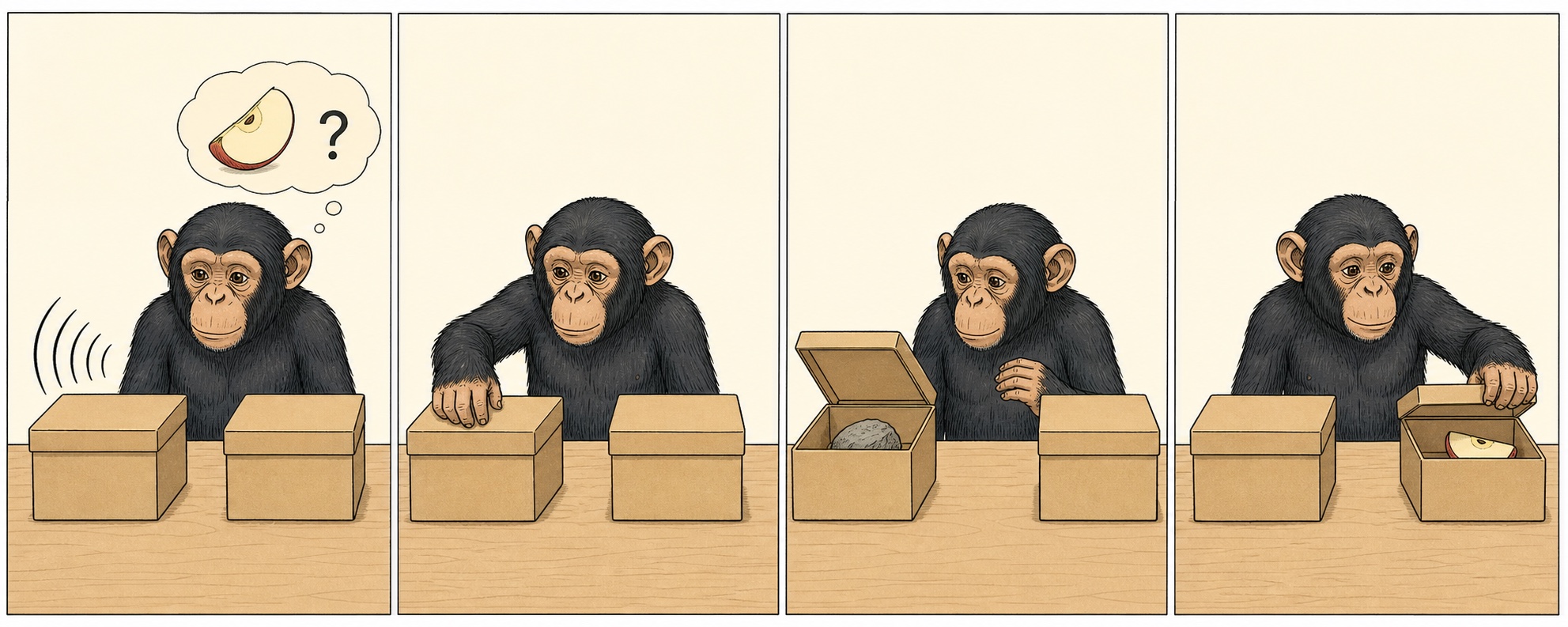
这组盒子实验可以按四步理解:
- 先前经验:某些声音或线索通常对应某类食物。
- 初始判断:黑猩猩根据第一条线索,先选择看起来更有希望的盒子。
- 新证据出现:第二条线索有时会推翻前面的判断,比如原本像苹果的声音,后来对应的却是一块石头。
- 更新选择:黑猩猩会重新评估证据,转向更可能有食物的盒子。
第 3-4 步对应的是证据更新后的反应:原来的证据被削弱之后,黑猩猩能很快调整选择。
1 Most impressive, the animals even accounted for clues that undermined earlier evidence.
2 If they heard something bouncing around inside box 1, given previous experience they would assume at first that it was an apple—but then the experimenter would pull out a stone.
3 Realizing they had been misled, the chimps would immediately opt for box 2 even though it had appeared uninspiring a moment before.
4 “None of us thought they could do it because it’s just so complex,” says study co-author Jan Engelmann, a comparative psychologist at the University of California, Berkeley.
承接上段的总体结果,具体展开实验中最复杂的一种情况:
① 点出复杂情形:黑猩猩能够处理会推翻先前证据的新线索
②-③ 说明具体过程:听到弹响以为是苹果→实验者取出石头→意识到被误导后立即转选另一个盒子
④ 研究者评价:研究团队原本也没有料到黑猩猩能够完成如此复杂的判断
- obey /əˈbeɪ/ v. 遵从,服从
- reason /ˈriːzn/ n. 熟词僻义 理性(≠ 原因)
- reflect /rɪˈflekt/ v. 熟词僻义 反思,深思(≠ 反射)
- reflect on 对……进行反思
- amoeba /əˈmiːbə/ n. 变形虫
- rationally /ˈræʃənəli/ adv. 理性地,合理地
- rational /ˈræʃənl/ adj. 理性的,合理的
- in some sense 在某种意义上
- chemical /ˈkemɪkl/ adj. 化学的
- signal /ˈsɪɡnəl/ n. 信号
- chemical signals 化学信号
2)without reflecting on it 介词短语作伴随状语,it 指代 reason,说明行事时并没有对这种理性进行反思
3)译文:当然,许多动物在不加反思的情况下也会遵循理性行事
2)译文:变形虫在理性地行动
2)it 指代 an amoeba;follow... toward... 追随……趋向……
3)译文:当它追随化学信号趋向食物时
- unreflective /ˌʌnrɪˈflektɪv/ adj. 非反思性的,不经深思的
- responsiveness /rɪˈspɒnsɪvnəs/ n. 响应性,反应能力
- evidence /ˈevɪdəns/ n. 证据,依据
- mere /mɪə(r)/ adj. 仅仅的,只不过是
- shadow /ˈʃædəʊ/ n. 影子;比喻义:与某事物仅有表面相似之处
- a mere shadow of 只是……的影子,远非……本身
- rationality /ˌræʃəˈnæləti/ n. 理性,理性能力
2)译文:这种“对证据的无反思性响应”
2)it 指代上文所说的 “动物未经反思便根据证据作出反应” 这种行为
3)译文:所谓的;正如人们一直称呼它的那样
2)a mere shadow of 意为“只是……的影子,远非……本身”
3)译文:只不过是人类理性的影子罢了
- chimpanzee /ˌtʃɪmpænˈziː/ n. 黑猩猩
- ability /əˈbɪləti/ n. 能力
- scrutinize /ˈskruːtənaɪz/ v. 仔细审查,细致考量
- gauge /ɡeɪdʒ/ v. 判断,估量
- certainty /ˈsɜːtnti/ n. 确定性,确信程度
- come close to 接近
2)argues that... 意为“认为/主张……”,that 引导宾语从句
2)the real thing 指代“真正的(人类)理性”,与上句 a mere shadow 形成对比
3)译文:黑猩猩的能力与真正的理性要接近得多
2)译文:审视证据并评估自身认知确定性的(能力)
1 Of course, lots of animals obey reason without reflecting on it; an amoeba is acting rationally, in some sense, when it follows chemical signals toward food.
2 This “unreflective responsiveness to evidence,” as it’s been called, is a mere shadow of human rationality.
3 But Engelmann argues that chimpanzees’ ability to scrutinize evidence and gauge the certainty of their own knowledge comes much closer to the real thing.
由实验结果转入结果分析,说明黑猩猩的表现为何更接近真正的理性:
①-② 对比说明:许多动物会作出合理反应,但并不会反思
③ 作出判断:黑猩猩能够审视证据并评估自身认知,因此更接近真正的理性
- cognition /kɒɡˈnɪʃn/ n. 认知
- be involved in 参与(某研究/某事)
2)译文:克里斯托弗·克鲁佩尼耶对此表示赞同
2)译文:他在约翰斯·霍普金斯大学研究动物认知
2)译文:且未参与这项研究
Johns Hopkins University 位于美国马里兰州巴尔的摩,是一所私立研究型大学。它在医学、公共卫生、生物医学研究等方向很有名,因此这个名字在相关领域报道中出现频率很高。

- agnostic /æɡˈnɒstɪk/ adj. 不可知论的;本句指不确定的,不下定论的
- content /ˈkɒntent/ n. 内容
- reflection /rɪˈflekʃn/ n. 熟词僻义 反思,思考(≠ 倒影)
- represent /ˌreprɪˈzent/ v. 代表,体现,象征
- mentally /ˈmentəli/ adv. 在心理上,在头脑中,精神上
- proposition /ˌprɒpəˈzɪʃn/ n. 提议,主张;命题
- make up 构成,组成
- belief /bɪˈliːf/ n. 信念,认知判断
- rattle /ˈrætl/ v. 发出咔嗒声,哗啦作响
2)that reflection 指上文黑猩猩表现出的反思能力
3)译文:对于这种反思的具体内容,他并不确定
2)译文:没有语言的话
2)mentally represent 是认知科学用语,指“使某种内容以某种形式存在于头脑中”,即“在头脑中表征”
3)proposition 此处指“命题”,即可以被相信、怀疑或判断真假的内容;后面的定语从句和括号内的例子都是在解释 proposition
4)译文:动物如何在头脑中表征那些命题,目前仍不清楚
2)proposition 表示“命题”,指可以判断真假的内容,例如“盒子里可能有苹果”。
3)belief 表示“信念”,指人相信某个命题为真,例如“我相信盒子里可能有苹果”。
4)proposition是 belief 的具体内容,定语从句的意思是“构成人类信念的命题”。
2)译文:“我听到了咔嗒声,所以盒子里大概是个苹果”
命题是可以被判断真假的内容。比如“盒子里有苹果”,就可以是真的,也可以是假的。
人类可以把很多信念说成这样的句子。动物没有语言,研究者只能通过行为去推测它们是否在头脑中形成了类似的判断。
- chimp /tʃɪmp/ n. 黑猩猩(chimpanzee 的缩写)
- primarily /praɪˈmerəli/ adv. 主要地
- think in pictures 以图像的方式思考
2)possible 是表语,表示后述情况“有可能”
3)翻译成中文时,通常处理成副词“可能”,放在谓语前,即“黑猩猩可能……”
2)primarily 修饰 think in pictures,意为“主要以图像的方式思考”
3)译文:黑猩猩主要以图像的方式思考
- regardless /rɪˈɡɑːdləs/ adv. 不管怎样,无论如何
- suggest /səˈdʒest/ v. 表明,暗示
- be driven by 被……驱动
- emotional /ɪˈməʊʃənl/ adj. 情绪的,情感的
- response /rɪˈspɒns/ n. 反应,回应
- rather /ˈrɑːðə(r)/ adv. 相当,颇为
- complex /ˈkɒmpleks/ adj. 复杂的
- awareness /əˈweənəs/ n. 意识,觉知
2)核心结构:suggest (that)... 表明……,suggest 后是省略that的宾语从句
3)译文:所有这些都表明,它们并非仅仅受简单的情绪反应驱动
2)译文:它们拥有一种相当复杂的认知意识
1 Christopher Krupenye, who studies animal cognition at Johns Hopkins University and was not involved in the study, agrees.
2 He’s agnostic about the content of that reflection—without language, it’s unclear how animals could mentally represent the propositions that make up human beliefs (“I hear rattling, so there’s probably an apple in the box”).
3 It’s possible the chimps think primarily in pictures.
4 Regardless, Krupenye says, “all of this suggests they’re not just driven by simple, emotional responses. They have a rather complex awareness.”
继续分析实验结果,先说明实验局限,再强调实验结论:
① 引入外部评价:另一位学者认同黑猩猩具有复杂认知
②-③ 说明实验局限:实验无法判断黑猩猩具体在想什么;它们可能主要以画面思考
④ 强调实验结论:黑猩猩并不只是受简单的情绪反应驱动
- clearly /ˈklɪəli/ adv. 显然,明显地
- rationality /ˌræʃəˈnæləti/ n. 理性,理性思维
- there’s more to sth 某事还有更多内涵/方面
- co-author /ˌkəʊˈɔːθə(r)/ n. 共同作者,合著者
- comparative /kəmˈpærətɪv/ adj. 比较的
- psychologist /saɪˈkɒlədʒɪst/ n. 心理学家
- the Netherlands /ðə ˈneðələndz/ n. 荷兰
- suggest /səˈdʒest/ v. 提出,认为
- crucial /ˈkruːʃl/ adj. 至关重要的
- ingredient /ɪnˈɡriːdiənt/ n. 熟词僻义 要素,成分(≠ 食材)
- interaction /ˌɪntərˈækʃn/ n. 互动,交流;相互作用
- social interaction 社会互动,社会交往
- sharpen /ˈʃɑːpən/ v. 使变锋利;使更加清晰、敏锐
- belief /bɪˈliːf/ n. 信念,看法
- through discussion 通过讨论
2)译文:汉娜·施莱豪夫认为,关键要素可能在于社会互动
2)这部分都是人物身份信息,阅读时抓住 Hanna Schleihauf 和后面的谓语 suggests 即可,其余内容可以快速略读
3)译文:该研究的合著者、荷兰乌得勒支大学比较心理学家汉娜·施莱豪夫
2)sharpen 本义“使变锋利”,此处是比喻用法,表示通过讨论让自己的看法更加清晰、严密
3)译文:我们通过讨论让自己的看法更加清晰、严密
Utrecht University 位于荷兰乌得勒支市,是荷兰历史较久的研究型大学之一。Utrecht 是荷兰中部的一座城市,距离荷兰首都阿姆斯特丹不远。

- human /ˈhjuːmən/ n. 人(可数,相当于 human being;复数 humans)
2)what makes humans so special 是 what 引导的表语从句;what 相当于 the thing that,在从句中作主语,整个从句表示“使人类如此特别的地方”
3)译文:“这才是人类真正特别的地方”
2)译文:“我们给出理由,也要求对方给出理由。”
- indeed /ɪnˈdiːd/ adv. 事实上,确实
- cognitive /ˈkɒɡnətɪv/ adj. 认知的
- cognitive scientist 认知科学家
- reasoning /ˈriːzənɪŋ/ n. 推理,推理能力
- evolve /ɪˈvɒlv/ v. 进化,演变
- so that 以便,为了
- argue /ˈɑːɡjuː/ v. 争论,辩论
- one another 彼此
2)译文:一些认知科学家认为
2)译文:人类的推理能力演化而来
2)could 表示“能够”,与过去时 evolved 呼应;so that + can/could 常用于表达目的
3)再结合本段对人与人之间讨论和论辩的强调,这里按目的理解,意为“为了让我们能够彼此辩论”
4)译文:为了让我们能够彼此辩论
1 Clearly, however, there’s still more to human rationality.
2 Study co-author Hanna Schleihauf, a comparative psychologist at Utrecht University in the Netherlands, suggests that the crucial ingredient may be social interaction—we sharpen our beliefs through discussion.
3 “This is really what makes humans so special,” she says. “We give and ask for reasons.”
4 Indeed, some cognitive scientists think our reasoning skills evolved so that we could argue with one another.
由实验结论转入延伸讨论,指出社会互动可能仍是人类理性的独特之处:
① 转入人类理性:人类理性还包含更多内容
②-③ 提出关键要素:人类通过讨论完善信念,并彼此给出、索要理由
④ 补充学界观点:人类的推理能力可能正是为了彼此论辩而演化出来的
- remind /rɪˈmaɪnd/ v. 提醒
- evolve /ɪˈvɒlv/ v. 进化;逐渐演变,发展
- namely /ˈneɪmli/ adv. 即,也就是说
- cognitive abilities 认知能力
- present /ˈpreznt/ adj. 熟词僻义 存在的(≠ 礼物;≠ 现在的)
- ancestor /ˈænsestə(r)/ n. 祖先
- common ancestor 共同祖先
- share /ʃeə(r)/ v. 分享;共有,共享
- chimp /tʃɪmp/ n. 黑猩猩(chimpanzee 的缩写)
- bonobo /bəˈnəʊbəʊ/ n. 倭黑猩猩
2)译文:这项研究提醒我们
2)somewhere 在这里不指具体地点,而是一个尚未说明的来源,后面的破折号将对此作具体解释
3)译文:这些能力也有其演化来源
2)译文:具体来说,它们源自认知能力
2)were already present 表示“早已存在”
3)译文:共同祖先已经具备的(认知能力)
2)share sth with sb 此处表示“与某人共有某物”,即我们与黑猩猩和倭黑猩猩拥有共同祖先
3)译文:我们与黑猩猩和倭黑猩猩共有的(祖先)
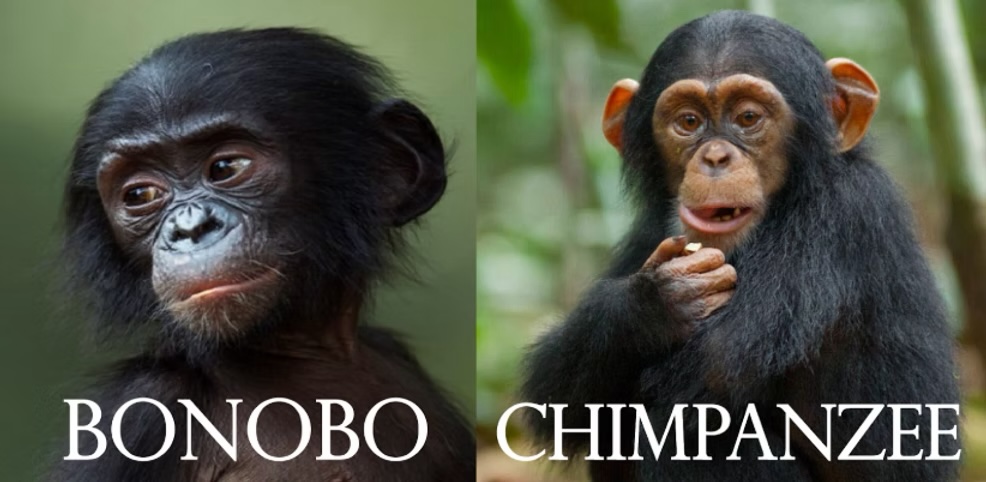
黑猩猩和倭黑猩猩同属类人猿,和人类亲缘关系都很近,是两个不同物种。从演化关系看,人类、黑猩猩和倭黑猩猩可以追溯到更早的 common ancestor(共同祖先)。
在这个演化框架下,一些基础认知能力可能早在这些分支分开之前就已经存在。
- chimpanzee /ˌtʃɪmpænˈziː/ n. 黑猩猩
- truly /ˈtruːli/ adv. 真正地
- capable /ˈkeɪpəbl/ adj. 有能力的
- be capable of 能够……
- reflection /rɪˈflekʃn/ n. 熟词僻义 反思,深思(≠ 反射;≠ 映像)
- gap /ɡæp/ n. 差距,鸿沟
- primate /ˈpraɪmeɪt/ n. 灵长类动物
- cousin /ˈkʌzn/ n. 熟词僻义 近亲(此处比喻指亲缘关系相近的物种,≠ 表亲)
- primate cousins 灵长类近亲
- narrow /ˈnærəʊ/ v. 缩小,变窄
2)be capable of 有能力做……
3)译文:如果黑猩猩确实具有反思能力
2)between us and our primate cousins 修饰 the gap,说明是人类与灵长类近亲之间的差距;primate cousins 意为“灵长类近亲”,用 cousins 拟人化,强调亲缘关系
3)a bit further 表示“又进一步缩小了一点”;further 暗示此前已经有所缩小
4)译文:那么我们与灵长类近亲之间的差距就又缩小了一些
- put /pʊt/ v. 熟词僻义 表达,表述,措辞(≠ 放置)
- as sb puts it 正如某人所说
- search /sɜːtʃ/ v. 搜寻
- the stars 外太空,星空
- intelligence /ɪnˈtelɪdʒəns/ n. 智慧,智力
- akin /əˈkɪn/ adj. 类似的,近似的
- akin to 与……类似
2)译文:正如黑尔所说
2)search A for B 表示“在 A 中寻找 B”;这里 A 是 the stars,指“外太空”,B 的核心是 intelligence,指“智慧”
3)akin to our own 是形容词短语,作后置定语修饰 intelligence;our own 后省略了 intelligence,表示“与人类自身的智慧相似的”
4)结合语境,intelligence akin to our own 指拥有与人类相似智慧的生命
5)译文:我们没有必要到外太空去寻找拥有与人类相似智慧的生命
- alone /əˈləʊn/ adj. 孤独的,独一无二的
- being /ˈbiːɪŋ/ n. 生物,生命(可数名词,复数 beings)
- consider /kənˈsɪdə(r)/ v. 思考,审视
- in a way 以一种方式
- think of ... as ... 把……视为……
- rational /ˈræʃənl/ adj. 理性的
2)not alone 呼应上句 search the stars,表示人类并不是唯一拥有这种理性能力的物种;already 强调我们已经知道这一点
3)译文:“我们已经知道自己并不孤独”
2)译文:地球上就有一些生灵
2)按英文结构可理解为“以一种方式看待这个世界的(生灵)”;整句翻译时,为避免中文定语过长,可调整为“有一些生灵,正以一种方式看待这个世界”
2)think of A as B 表示“把 A 视为 B”
3)译文:我们认为是理性的(方式)
1 This study reminds us that those skills evolved from somewhere—namely, from cognitive abilities that were already present in the common ancestor we share with chimps and bonobos.
2 If chimpanzees are truly capable of reflection, the gap between us and our primate cousins narrows a bit further.
3 As Hare puts it, there’s no need to search the stars for intelligence akin to our own.
4 “We already know we’re not alone,” he says. “There are beings here considering the world in a way that we think of as rational.”
回到黑猩猩实验,从演化角度总结研究意义:
① 说明研究价值:黑猩猩的表现有助于理解人类理性的演化来源
② 作出最终判断:研究没有消除物种差异,但进一步缩小了人与灵长类近亲的认知差距
③-④ 结尾点题:与人类相似的智慧不必到外太空寻找
Para 1:以生活化场景作引子,引出“信念修正”这一话题
Para 2:定义信念修正,交代传统认知,再用新研究提出挑战
Para 3:整体介绍实验目的、实验流程和实验结果
Para 4:具体展开实验中最复杂的一种情况
Para 5:说明黑猩猩的表现为何不只是简单反应,而更接近真正的理性
Para 6:借外部学者的评价,说明实验局限并强调实验结论
Para 7:由实验结论转向人类理性,指出社会互动可能仍是人类的独特之处
Para 8:从演化角度说明实验价值,指出人与灵长类近亲的认知差距进一步缩小
这篇外刊是一篇典型的实验类文章。通常这类文章乍一看会有点难读,需要把实验过程想清楚,抓到一条明确的实验线:研究者想验证什么,找了谁做实验,给了什么条件,观察到了什么变化。抓住这条线,读起来会轻松一些。
实验题材的文章在真题里也多次出现过,读法和语言表达都有一些相通的地方。这里把这类文章的思路整合一下,带大家把思路理一理,也顺便积累一些实验相关的表达。
实验问题
实验类文章经常从一个比较大的话题切入,比如情绪、健康、认知这些“大”的话题。进入实验时,这个大话题会转向一个更具体的问题,后面的实验也会围绕这个问题展开。
比如 2011 完形的开头:
Ancient Greek philosopher Aristotle viewed laughter as “a bodily exercise precious to health.”
古希腊哲学家亚里士多德认为,笑是一种“对健康有益的身体运动”。
往下读,文章从“笑是否有益健康”这个大话题,转向更具体的“身体/肌肉反应是否会影响情绪”:
evidence suggests that emotions can flow from muscular responses.
证据显示,情绪可能来自肌肉反应。
再比如我们本篇外刊,前面先谈 belief revision(信念修正)和人类理性:
This cognitive skill is known as belief revision. It’s long been considered a hallmark of human rationality that distinguishes us from other animals.
这种认知能力被称为“信念修正”。长期以来,它一直被认为是人类理性的典型标志,使我们区别于其他动物。
后面实验的问题,则转向黑猩猩怎样处理不同证据:
to see how the animals juggled different sources of evidence
看看这些动物如何处理不同来源的证据
这类写法,其实是在交代这个实验为什么值得做:先从一个较大的讨论进入,再转向具体问题、方法和结果;等到讨论意义时,再把结果放回更大的问题里看。英文里常说 general → specific → general。
实验对象
实验对象看的是这项实验具体观察谁。真题里常见 volunteers、subjects、participants 这类词;这篇外刊里,研究对象则是黑猩猩。
有时文章还会顺便交代人数、年龄、身份等信息,主要是让读者知道这项实验观察的是哪一类对象。
实验方法
实验方法看的是研究者怎样安排任务:让实验对象做什么,给什么线索或条件,有没有分组或对照。
比如 2011 完形写到的是一个含笔实验,实验里的具体方法是:
asked volunteers to hold a pen either with their teeth — thereby creating an artificial smile — or with their lips, which would produce a disappointed expression
让志愿者用牙齿咬住一支笔,从而制造出人为的微笑;或者用嘴唇叼住一支笔,从而形成一种失望的表情
这个设计里的对照很清楚:用牙齿含笔的一组,和用嘴唇含笔的一组。很多实验都会像这样直接分组,比如 2025 阅读 Text 1,把学生直接分成了 Target Group 和 Control Group。
本篇报道没有着重展开分组对照,而是把重点放在线索的变化上:黑猩猩先根据第一条线索选盒子,随后又得到一条可能相矛盾的新线索。
If they heard something bouncing around inside box 1, given previous experience, they would assume at first that it was an apple — but then the experimenter would pull out a stone.
如果它们听到有什么东西在箱子 1 里弹来弹去,根据以往经验,它们一开始会认为那是一个苹果;但随后实验者会从中取出一块石头。
实验结果
实验结果看的是观察到了什么变化。常见的是某一组更高或更低,某种反应更强或更弱,某个行为出现得更多或更少。
2011 完形里,用牙齿含笔、形成“微笑”状态的那组志愿者,对搞笑漫画反应更积极:
the first group reacted more enthusiastically to funny cartoons
第一组志愿者对搞笑漫画反应更积极
这篇外刊的结果写的是黑猩猩在新旧线索冲突时怎么选:
they almost always chose the box predicted by a rational-choice model and changed their mind only when the new information was stronger than what they already knew
它们几乎总是选择理性选择模型预测的那个盒子,并且只有当新信息比原先知道的信息更强时才改变主意
实验结果通常写的是比较直接的变化,比如实验里能观察到的反应、选择或行为。
实验解释
实验结果出来以后,文章通常还会往前推一步:这个结果能说明什么,和前面提出的问题有什么关系。前面说过 general → specific → general,解释部分往往就是最后这个 general。
在 2011 完形中,针对“微笑状态的志愿者反应更积极”这个结果,作者给出的解释是:
suggesting that expressions may influence emotions
说明表情可能影响情绪
到这里,前面的健康话题已经变成了一个更具体的问题:身体/肌肉反应和情绪之间是否有关。
这篇外刊后面也会谈这个结果说明了什么:
all of this suggests they’re not just driven by simple, emotional responses. They have a rather complex awareness.
所有这些都表明,简单的情绪反应解释不了它们的行为;它们有一种相当复杂的认知意识。
文章从黑猩猩怎么选,继续谈到这种选择背后的认知能力。
读这块内容的时候,可以顺便看一下语气。
- show / demonstrate:显示、表明,语气相对直接
- suggest:说明、表明,语气会留一点余地
- may / could / be associated with:可能、可能会、与……有关,多见于可能性或相关性
1. 研究问题和实验对象
| 研究问题 | |
| examined the effects of A on B 2017 完形 | 考察 A 对 B 的影响 |
| to find whether the change in A enhances B 2025 阅读 Text 1 | 为了弄清 A 的改变是否能提升 B |
| Whether this research translates elsewhere... 2021 阅读 Text 2 | 这项研究能否适用于别处 |
| could the results be replicated with...? 2025 阅读 Text 1 | 结果能否在……上重复/推广 |
| 实验对象 | |
| volunteers 2011 完形 | 志愿者 |
| subjects 2018 完形 | 受试者 |
| participants 2017 完形 | 参与者 |
| year 5 pupils 2025 阅读 Text 1 | 五年级学生 |
| children / toddlers 2018 完形 | 儿童/幼儿 |
| an analysis conducted on... 2015 完形 | 在……身上进行的分析 |
2. 实验方法
| 实验对照 | |
| the researchers compared A with B 2026 阅读 Text 4 | 研究者把 A 和 B 作比较 |
| They were split into target and control groups 2025 阅读 Text 1 | 他们被分成实验组和对照组 |
| target group and control group 2025 阅读 Text 1 | 实验组和对照组 |
| counterparts 2018 完形 | 对应组 / 对照对象 |
| 实验指令 | |
| asked volunteers to hold a pen... 2011 完形 | 要求志愿者含笔 |
| Sixty toddlers were each introduced to an adult tester... 2018 完形 | 60 名幼儿分别被带到一名成人测试者面前 |
| The target group were given a 30-minute drama-based activity... 2025 阅读 Text 1 | 实验组接受 30 分钟戏剧活动 |
| 后续处理 | |
| they survey and sample large areas of terrain 2014 新题型 Part B | 他们调查并采样大面积地形(survey 和 sample 在这里均作动词) |
| scientists teamed up to compile a database of fire-scarred trees 2026 阅读 Text 4 | 科学家合作建立数据库 |
| Ferraro analyzed data showing annual forest loss 2021 阅读 Text 2 | Ferraro 分析数据,数据显示年度森林损失 |
3. 实验结果与解释
| 实验结果 | |
| reacted more enthusiastically to funny cartoons 2011 完形 | 对搞笑漫画反应更积极 |
| were less likely to come down with a cold 2017 完形 | 更不容易感冒 |
| were ready to lend significantly higher amounts of money 2018 完形 | 愿意借出明显更多的钱 |
| 实验解释 | |
| The peer-reviewed results showed that... 2025 阅读 Text 1 | 同行评审结果显示…… |
| demonstrating that they trusted his leadership 2018 完形 | 表明……他们信任他的引导 |
| suggesting that expressions may influence emotions 2011 完形 | 说明……表情可能影响情绪 |
| there is no conclusive evidence that it causes cancer in humans 2020 完形 | 没有确凿证据表明它会导致人类癌症 |
| are associated with a decline in fluid intelligence 2021 完形 | 与流体智力下降有关 |
2011 完形
文章逻辑
Para 1|提出并限定观点:笑对身体健康的直接作用有限
- ①引入观点:亚里士多德认为,笑是一种对健康有益的身体运动。
- ②限定观点:笑对 physical fitness(身体健康/体能)的直接影响可能很有限。
- ③补充事实:笑会带来心率、耗氧量等短期生理变化。
- ④说明原因:大笑难以持续,所以不像 walking(走路)或 jogging(慢跑)那样有可测量的运动收益。
Para 2|说明身体反应:笑会让肌肉放松
- ①建立参照:真正的锻炼会 stretch muscles(拉伸肌肉)、build them up(塑造肌肉)。
- ②说明差异:笑会产生相反的作用:它会 relax muscles(放松肌肉),笑过之后肌肉张力会下降一段时间。
Para 3|推进观点:身体反应可能影响情绪
- ①提出作用:这种身体反应可能缓和 psychological stress(心理压力)。
- ②转向核心问题:笑还可能产生 physical feedback(身体反馈),改善情绪状态。
- ③引入理论:经典情绪理论认为,人的感受有一部分扎根于身体反应。
- ④举例说明:“哭和悲伤”的例子说明,身体反应也可能反过来影响情绪。
Para 4|引入实验:表情可能反过来影响情绪
- ①承接上文:悲伤固然先于眼泪,但证据也显示,情绪可能来自肌肉反应。
- ②交代方法:1988 年含笔实验让志愿者用牙齿或嘴唇含笔,分别形成类似微笑和失望的面部状态。
- ③呈现结果:形成“微笑”状态的那组志愿者,对搞笑漫画反应更积极。
- ④推出解释:表情可能影响情绪,笑这个身体动作也可能改善心情。
2017 完形
文章逻辑
Para 1|提出观点:拥抱可能有益健康
- ①改写谚语:开头借 “an apple a day keeps the doctor away” 的说法,把 apple 换成 hug。
- ②给出判断:答案可能是 yes。
- ③补充常识:拥抱会让人感到亲近和连接。
- ④引出健康问题:温暖的拥抱甚至可能帮人少生病。
Para 2|介绍研究:社会支持、拥抱与感冒风险
- ①交代对象:研究对象是 400 多名 healthy adults(健康成年人)。
- ②交代变量:研究考察 perceived social support(感知到的社会支持)和 hugs(拥抱)对感冒风险的影响。
- ③交代场景:参与者接触病毒后,研究者观察他们是否更容易感冒。
- ④呈现结果一:社会支持越多,越不容易感冒。
- ⑤呈现结果二:拥抱约占社会支持缓冲压力作用的 32%。
- ⑥呈现结果三:即使感冒,社会支持和拥抱更多的人症状也更轻。
Para 3|解释研究结果:拥抱可以减轻压力
- ①引用研究者解释:Sheldon Cohen 把拥抱和 stress(压力)联系起来。
- ②说明作用:拥抱可以保护压力中的人,降低与压力相关的感冒风险。
- ③补充含义:拥抱是亲密的标记,也会让人感到困难时有人支持。
Para 4|补充生理机制:催产素会影响依恋、情绪和行为
- ①提出机制:一些专家把拥抱的健康收益归因于 oxytocin(催产素)。
- ②解释概念:催产素促进依恋,因此被称作 “the bonding hormone”(联结荷尔蒙)。
- ③交代去向:催产素主要在大脑中产生,也会有一部分进入血液。
- ④说明影响:留在大脑中的那部分会影响 mood(情绪)、behavior(行为)和 physiology(生理机能)。
2018 完形
文章逻辑
Para 1|提出话题:信任不可缺少,也伴随风险
- ①提出话题:trust(信任)很 tricky(复杂/棘手)。
- ②说明价值:child care(儿童照护)、friendships(友谊)这些事都需要信任。
- ③提醒风险:信错对象往往要付出很高代价。
Para 2|研究一:催产素会不会影响信任
- ①提出问题:既然信任有风险,人为什么还会信任?
- ②直接回答:because it feels good(因为感觉好)。
- ③解释机制:人信任他人或机构时,大脑会释放 oxytocin(催产素),让人进入更愿意信任的状态。
- ④交代实验:瑞士研究中,一半受试者吸入催产素,另一组吸入其他物质。
- ⑤呈现结果:催产素组愿意借给陌生人的钱明显更多。
Para 3|研究二:幼儿能否识别不可靠的人
- ①切换角度:人也有识别 dishonesty(不诚实)的能力。
- ②引出研究:加拿大研究考察 14 个月大的幼儿。
- ③交代方法:测试者拿着容器,请孩子猜里面有什么;她看过以后表现得很兴奋。
- ④形成经历差异:一半孩子看到玩具,另一半发现容器是空的,于是意识到测试者骗了自己。
Para 4|研究二的结果:被欺骗后,幼儿会减少合作
- ①呈现结果一:没被骗过的孩子,大多数愿意继续和测试者合作学习新技能。
- ②呈现结果二:被不可靠测试者骗过的孩子,后续愿意参与的人很少。
- ③说明差异:幼儿会根据测试者此前是否可靠,决定是否继续合作。
2025 阅读 Text 1
文章逻辑
Para 1|先给出研究结论:莎士比亚作品有助于孩子发展,但要“演出来”
- ①人物替代:开头用 “grammar school boy from Stratford-upon-Avon” 指代 Shakespeare(莎士比亚)。
- ②给出结论:莎士比亚作品有助于孩子的 literacy(读写能力)和 emotional development(情绪发展)。
- ③补充条件:这种效果需要孩子把作品 act out(演出来)。
Para 2|解释教学方法:什么是排练室方法
- ①引入方法:文章引入 rehearsal room approach(排练室方法)。
- ②呈现效果:这种方法能扩大词汇量、增加写作复杂性,也能提升 emotional literacy(情绪素养)。
- ③引用评价:英国皇家莎士比亚剧团(RSC)相关人士解释,演员的工作方式会影响孩子使用语言的方式,也影响他们理解自己的方式。
Para 3|介绍实验:研究对象、分组和任务
- ①交代类型:研究类型是 randomised control trial(随机对照实验)。
- ②交代对象:对象是 45 所公立小学里的数百名五年级学生。
- ③交代分组:学生被分成 target group(实验组)和 control group(对照组)。
- ④交代共同任务:两组都围绕 The Tempest 写瓶中信。
- ⑤交代关键条件:实验组多了 30 分钟 drama-based activity(戏剧活动)。
Para 4|呈现实验结果:两组学生的写作差异
- ①总体结果:实验组词汇更广、用词更复杂或少见、篇幅也更长。
- ②角色表达:控制组更常写“如果是我遇到海难会怎样”,实验组更能进入文学角色处境。
- ③场景描写:控制组更依赖 desert island cliché(荒岛陈词滥调),实验组描写更开阔。
Para 5|转向情绪素养:排练过程怎样发挥作用
- ①聚焦情绪:文章继续看 emotional literacy(情绪素养)。
- ②呈现发现:O’Hanlon 注意到实验组写作中呈现出的情绪理解、resilience(韧性)和 hope(希望)。
- ③解释来源:这种变化可能来自 rehearsal room process(排练室过程):学生习惯完整想象角色经历,也习惯把自己放进不同处境。
- ④提升意义:艺术进入教育的重要性被再次强调。
Para 6|讨论适用范围:能否推广到其他剧作家
- ①提出边界:这样的结果能不能复制到其他古老剧作家身上?
- ②保留判断:还需要更多研究。
- ③回到材料:Shakespeare(莎士比亚)庞大的词汇量给孩子带来语言扩展。
- ④回到方法:孩子用身体让文字鲜活起来,可能是效果的重要来源。